
▍Introduction: Direct Hit on Site! Stepping into Triplast Plastic Industries, Malaysia
As global supply chains restructure, Southeast Asia is rapidly emerging as a new manufacturing powerhouse. However, the subsequent expansion and cross-border management of factories bring severe challenges, including soaring management complexity, labor shortages, and information opacity.
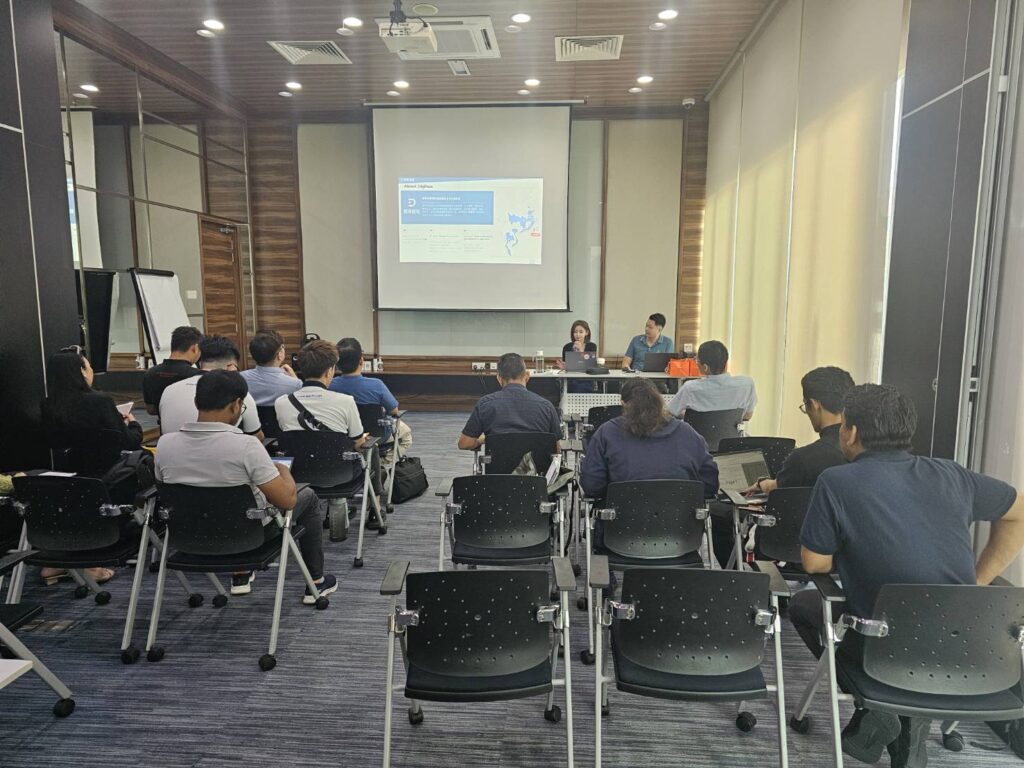
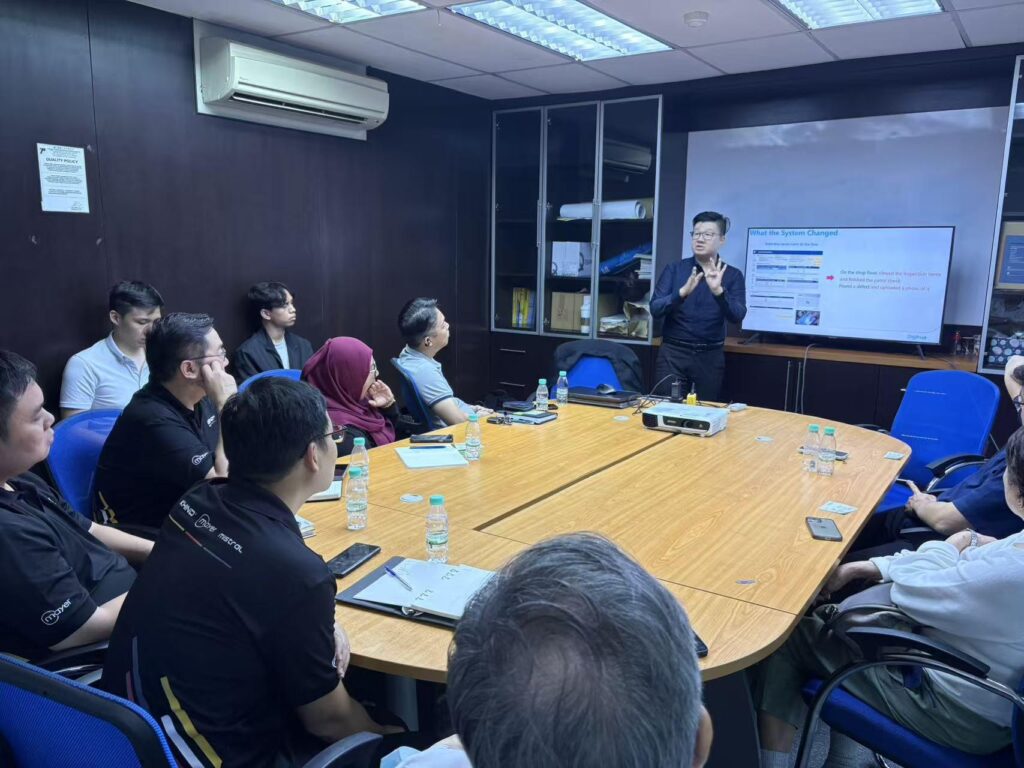
Today, the “Inside the Smart Factory” event, hosted by Digihua’s partner Neogenius and co-organized by Triplast Plastic Industries and Digihua Intelligent Systems, was successfully held in Kapar, Klang! The event gathered numerous manufacturing executives and experts. Through on-site presentations and a factory tour, attendees witnessed firsthand how a traditional plastic injection molding factory successfully transformed into a highly transparent digital factory.
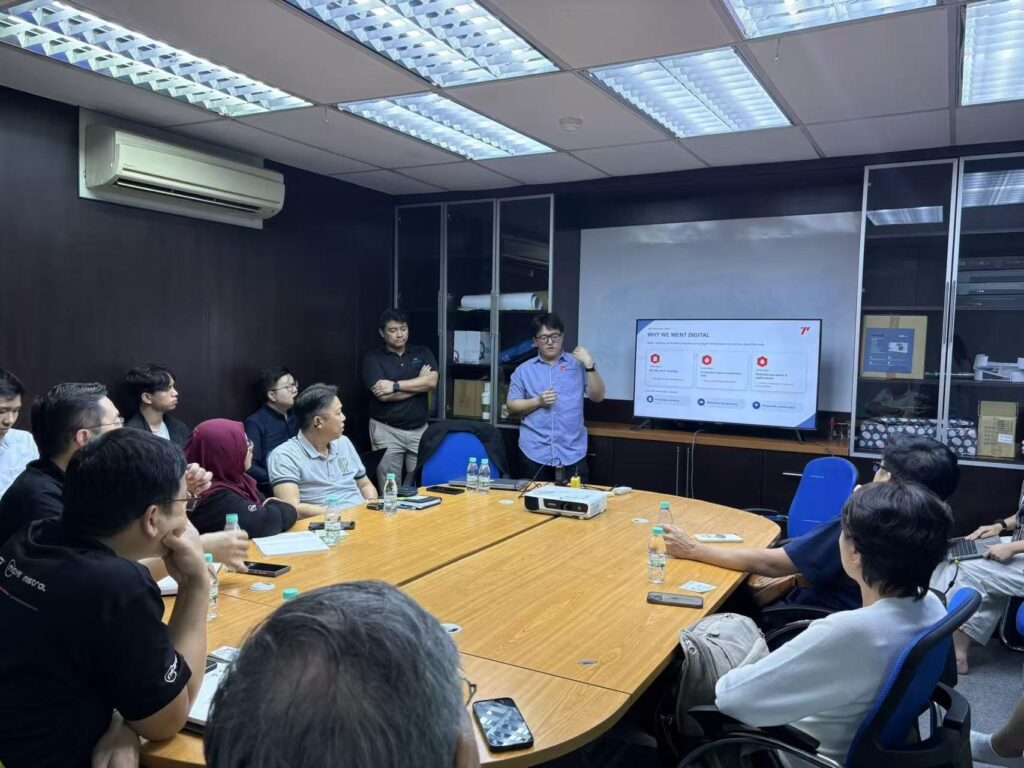
▍Core Topic 1: Triplast Practical Sharing | Second-Generation Leadership Drives Factory Transparency with Data
As a renowned precision plastic injection manufacturer in Malaysia, Triplast operates over 30 injection molding machines, automated robotic arms, and an in-house mold development department. Its product portfolio spans household goods, bathroom fixtures, and office furniture components.
J.Y., the second-generation manager and plant director of Triplast, stated candidly during his sharing session that the factory previously faced common pain points typical of traditional manufacturing:
❌ Pain Points and Challenges Before Transformation
- Delayed Paperwork and Information Lag: Heavy reliance on paper forms meant production data often took half a day or even a full day to compile, preventing management from making timely decisions.
- Excessive Mold-Change Time and Downtime Losses: Lacking precise monitoring of mold-change durations, standard 45–60 minute mold-change procedures frequently dragged on for 1 to 2 hours or half a day.
- Ineffective Communication and Misunderstandings: Sales and production departments communicated frequently across departments, but misunderstandings often arose due to asymmetric information.
💡 Key Changes and Benefits After Implementing the Digihua sMES System
To steer management toward systematic operations, Triplast pushed forward with deep integration between ERP, Digihua sMES, and IIoT. J.Y. specifically shared the core modules and benefits he utilizes daily:
- Live Production Board
- Factory-wide machine status is clear at a glance (running, idle, maintenance, fault), showing real-time target versus actual output, good and defective product counts, and cycle times.
- Work Order Transparency and Real-Time Tracking
- From raw material requisition and injection molding to warehousing, every process and work order progress can be tracked at any time. When sales inquire about progress, they can provide precise answers with just two clicks.
- First Article Inspection (FAI) and Quality Root Cause Tracking
- Integrating First Article Inspection standards and early warning systems into the platform enables quality control personnel to record defect reasons in real-time (such as short shots, color variations, or quality adjustments), controlling quality right from the source.
- Mold Status and Mold-Change Time Optimization
- Precisely recording mold installation/removal times and stroke counts, the system automatically prompts for maintenance when predetermined strokes are reached, significantly reducing unexpected downtime.
- Comprehensive Paperless Operations and Communication Cost Reduction
- Eliminating massive amounts of paper forms and cumbersome communication, management can grasp overall operational dynamics directly through the system.
J.Y. concluded: “Digital transformation is not just about saving paper; more importantly, it’s about building a ‘Single Source of Truth.’ Now I no longer need to scour the factory floor looking for supervisors to hold meetings; I can grasp the overall situation instantly through the system.”
▍Core Topic 2: In-Depth Analysis by Digihua Expert Tony Chou | How to Avoid “Digital Transformation Traps” When Deploying in Southeast Asia
Chewei Chou, Senior Director of Digihua’s Southeast Asia Business Unit, who brings 18 years of manufacturing management and practical factory experience, delivered an insightful and penetrating analysis of the common pitfalls Southeast Asian enterprises encounter when implementing digital transformation:
⚠️ Trap Avoidance Guide 1: Breaking Free from the “One-Man Factory / Owner Dependency Syndrome,” Encapsulating Domain Knowledge into the System
In Southeast Asia, many factories heavily rely on “heroic management”—where the owner or a single planner is almighty, juggling order intake, maintenance, scheduling, and customer service. Once key personnel take leave or resign, the entire factory faces paralysis.
- Expert Advice: The purpose of system implementation is not to build the most complex IT infrastructure, but to sort out and encapsulate personal experience (Domain Knowledge) and management logic into MES and AI Agents. This transitions the factory from “rule of man” to “rule of law,” upgrading the manufacturing team into a true manufacturing enterprise.
⚠️ Trap Avoidance Guide 2: Avoid “Directly Coding Old Workflows”—Standardize Before Systemizing
Many enterprises hire IT teams to directly translate chaotic on-site paper workflows into a software system, resulting in a system that becomes increasingly cumbersome to use.
- Expert Advice: Follow the correct transformation path: Workflow Digitization ➔ Process Standardization ➔ Standard Systemization ➔ System Networking/Intelligence. Streamline and simplify processes first to fully unleash system benefits.
⚠️ Trap Avoidance Guide 3: View ROI Rationally—MES is an Industrial Engineering (IE) Tool, Not a Magic Wand
Owners often ask: “How soon can we recover the cost (ROI) of implementing MES? Will it automatically improve yield rates?”
- Expert Advice: The MES system itself will not automatically increase yield rates, but it serves as an industrial engineering (IE) management tool to help you identify labor waste, machine bottlenecks, and bottleneck operations.
⚠️ Trap Avoidance Guide 4: Confronting Southeast Asia’s “Labor Shortage Wave”—Using Systemization to Lower Skill Barriers
While people once believed Southeast Asia enjoyed massive demographic dividends and labor abundance, factories in places like Vietnam and Malaysia now face mounting labor shortages as younger generations shun factory floors.
- Expert Advice: Use MES for “Manufacturing Guidance,” allowing on-site operators to scan codes to operate and report work according to Standard Operating Procedures (SOPs). This reduces training costs and error rates, enabling new hires to get up to speed quickly.
⚠️ Trap Avoidance Guide 5: Clarifying ERP, MES, and IIoT Responsibilities
- ERP manages operations, finance, and inventory (post-event cost settlement).
- MES manages on-site execution (“Why hasn’t the released work order moved?”).
- IIoT is responsible for machine connectivity and underlying data collection. Through close collaboration with local partner Neogenius—where Neogenius handles localized IIoT device connectivity and hardware integration, and Digihua focuses on MES business logic and management flow—both companies jointly provide seamless, localized solutions for Southeast Asian clients.
▍On-Site Insight and Future Outlook
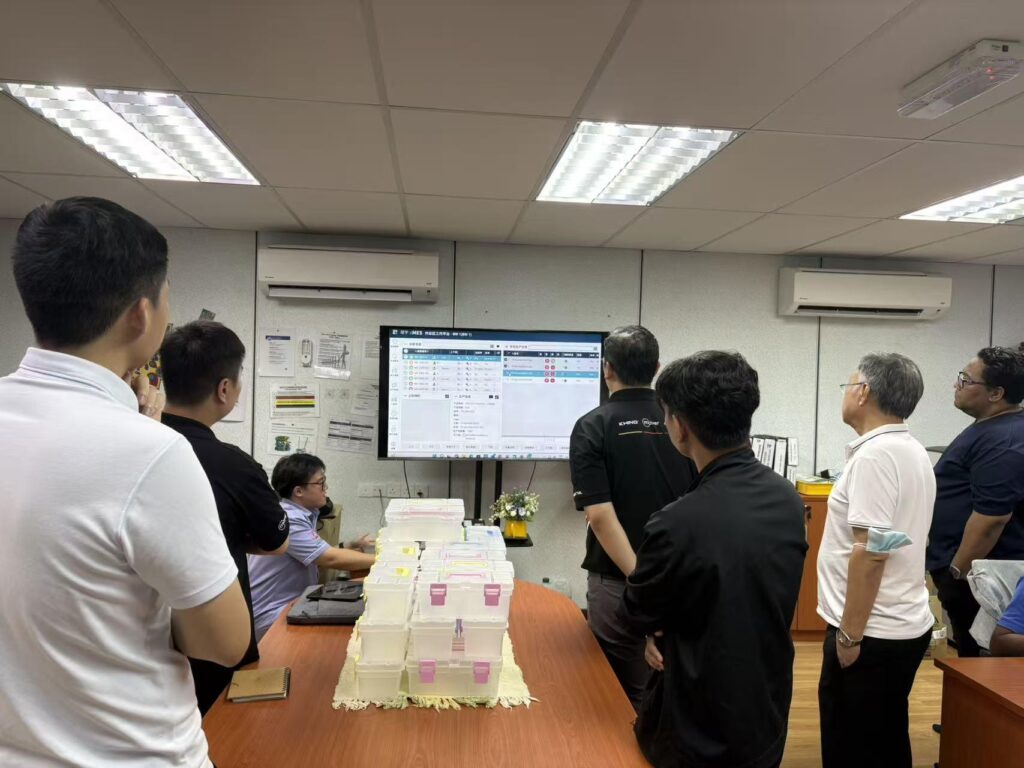
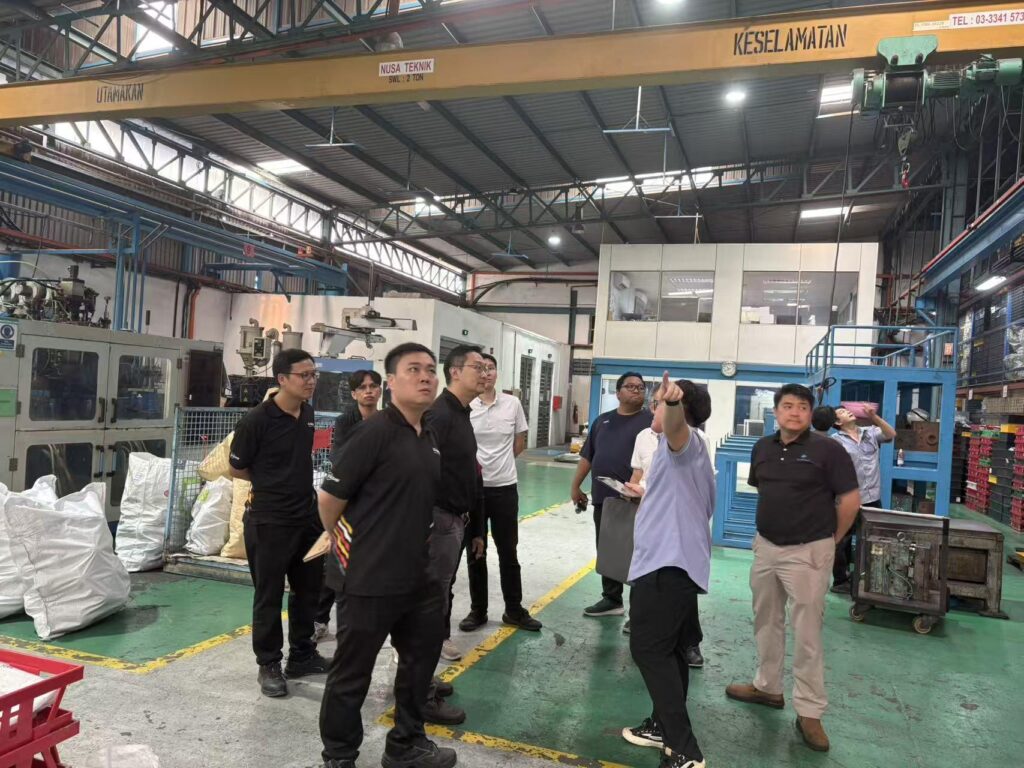
Following the presentations, attending guests—guided by the Triplast team and Digihua consultants—conducted a factory tour of Triplast’s production floor, observing live operations of sMES dispatching, real-time work order reporting, First Article Inspection, and electronic dashboards.
Digital transformation is not an endpoint, but a continuous journey of optimization. As demonstrated by event host Neogenius, co-organizers Triplast Plastic Industries, and Digihua Intelligent Systems, through localized technical support, mature system architecture, and solid management thinking, Southeast Asian manufacturing is fully equipped to build world-class smart factories!