

A New Wave of Globalization: ASEAN’s Manufacturing Transformation Coordinates
Amid global supply chain restructuring, Southeast Asia is emerging as a core hub for advanced manufacturing. Within the industrial wave of Thailand’s EEC (Eastern Economic Corridor), a growing number of manufacturing enterprises face a common bottleneck during digital transformation: automation and connected devices are in place, and shop-floor dashboards are lighting up, but why is production management still chaotic, and delivery schedules still hard to control?
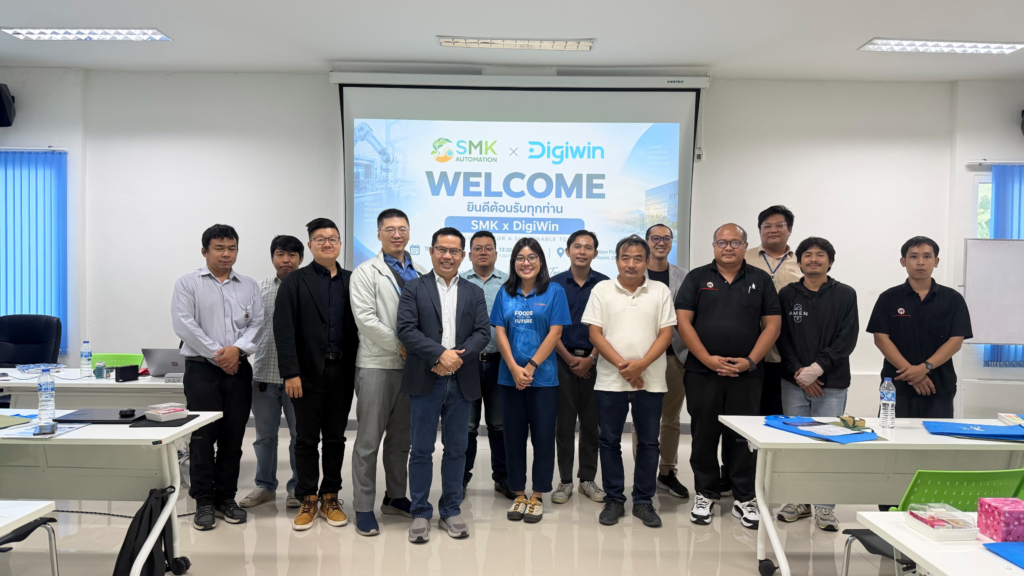
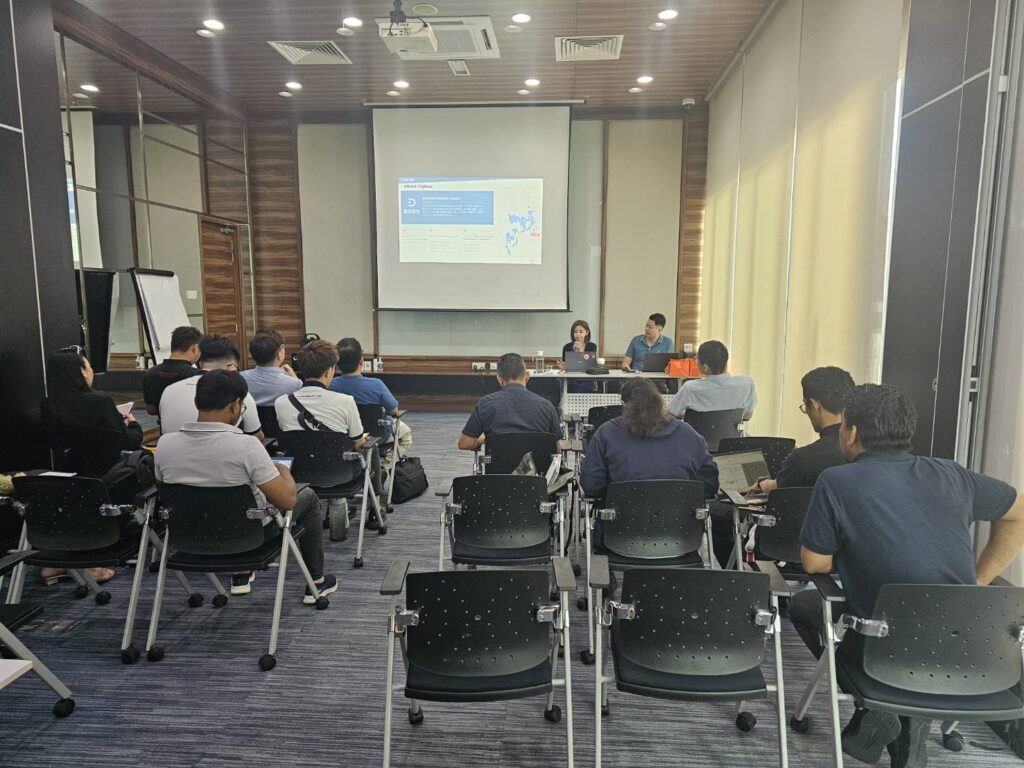
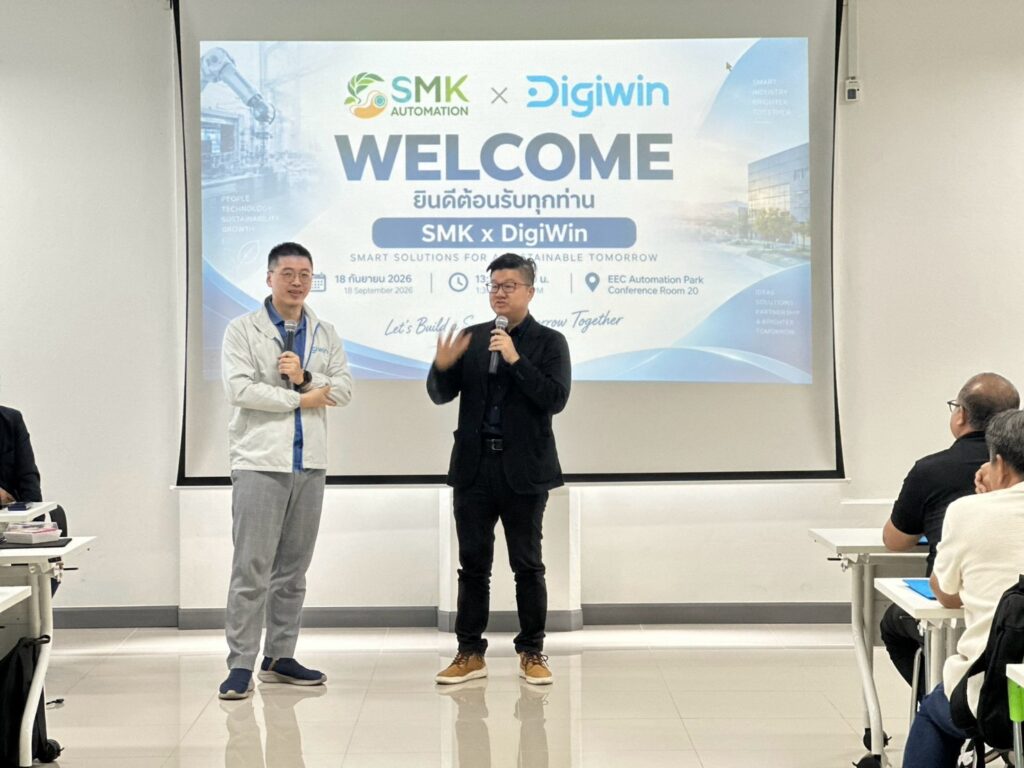
On September 18, 2026, at the EEC Automation Park in Thailand, DigiHua Intelligent Systems, Digiwin Thailand, and local automation and industrial networking expert SMK Automation jointly hosted an offline technical seminar themed “IT and OT Convergence: Breaking the Myths of Digital Factories.”
Targeting local Thai manufacturing enterprises, this seminar addressed critical pain points in the deep waters of digitalization. Leveraging DigiHua’s years of deep industry expertise in intelligent manufacturing, the event officially unveiled the underlying logic of shop-floor transparency and high-efficiency management for Thai manufacturers.
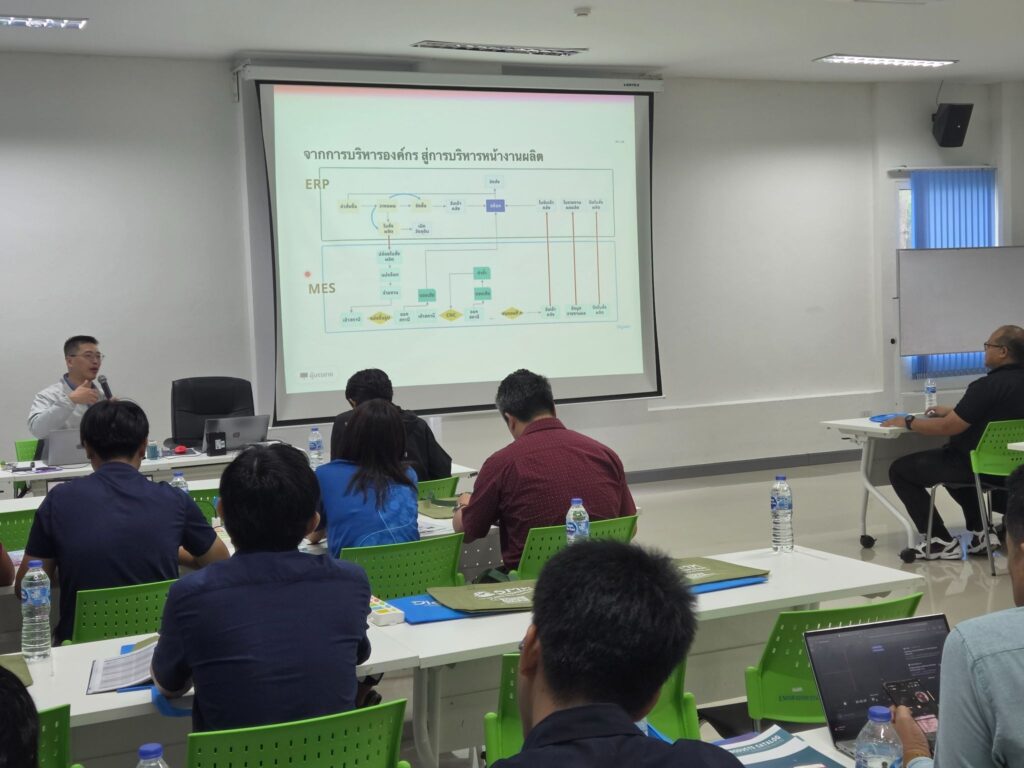
Chewei Zhou, Director of the Taiwan and Southeast Asia Business Division at DigiHua Intelligent Systems, stated: “With over 40 years of dedication to the manufacturing industry and serving more than 3,000 factory systems, DigiHua and Digiwin understand shop-floor pain points inside and out. We have encapsulated these deep industry best practices into our system architecture. Through our mature eMES product and native local delivery capabilities, we aim to empower factories in collaboration with our Thai partners using models that best fit their current realities. MES is not only the core of shop-floor transparency but also the crucial manufacturing data foundation. Only by solidifying this foundation can enterprises steadily move toward future AI-driven digital management.”
1. Breaking the Myth: SCADA Dashboards MES — Don’t Let Device Connectivity Obscure Work Order Realities
During the keynote sharing, a sharp analysis was directed at a common transformation misconception: “Does collecting device data and creating beautiful SCADA dashboards mean MES has been achieved?” The answer is a resounding no.
SCADA and device connectivity solve the real-time status of “Machines”—whether equipment is running, its speed, and its temperature. However, the true core of manufacturing management revolves around orders and products.
If device data is not contextualized and mapped back to the MES (Manufacturing Execution System) layer, it remains isolated data silos:
- Dimensional Disconnect: Knowing a machine is running, but not knowing which work order or process step is currently being executed.
- Element Fragmentation: Device data cannot be linked with Personnel (Who), Material batches (Material), Processes (Method), Tooling (Tooling), and Quality inspections (Quality).
The core value of DigiHua eMES lies in consolidating the six major manufacturing elements—Man, Machine, Material, Method, Environment, and Measurement—into a unified MES platform, establishing a closed-loop manufacturing process centered on the work order. By refining underlying device data into real-time, work order-level production metrics, managers gain real-time early warnings, dynamic scheduling, and decision-making agility, achieving end-to-end process traceability and transparency.
2. On-Site Live: The Journey of a Work Order and the Pulse of a Digital Twin Factory
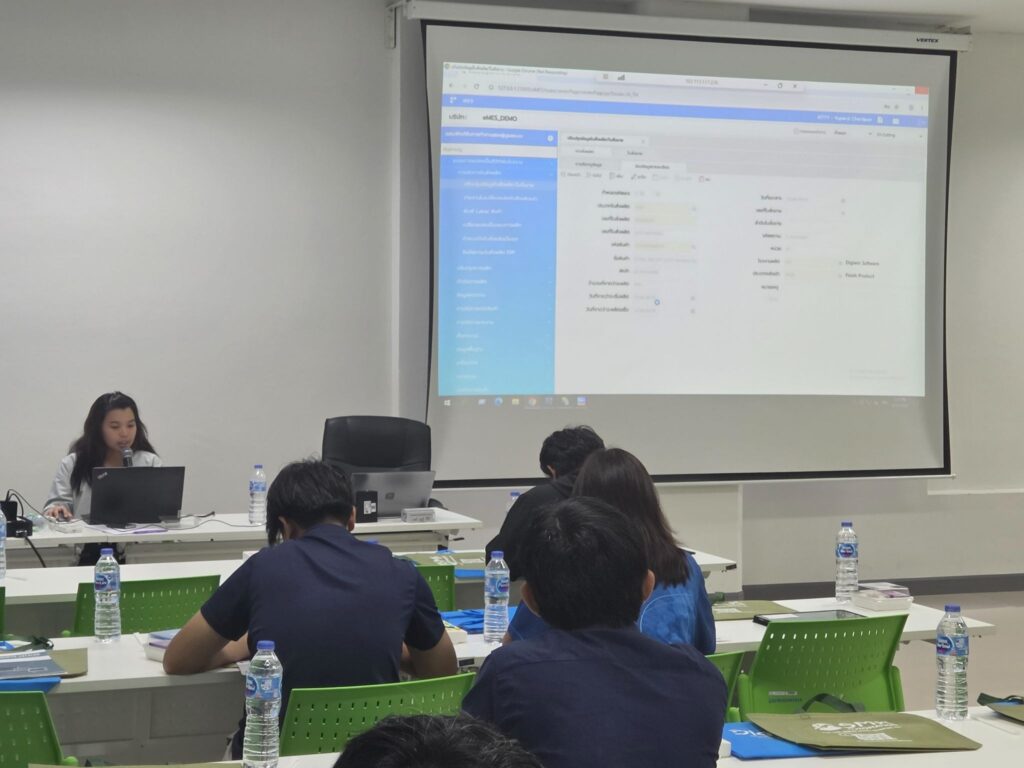
Concepts need to be implemented, and technology must be verified. During the core session, local Thai consultant Yu-Pa Chen delivered a highly immersive, live dynamic demonstration of a work order’s journey:
- Work Order Release & Scheduling: Orders flow from top-level systems to eMES, where precision error-proofing guides on-site material matching and tooling readiness status.
- Shop-Floor Reporting & Element Collection: Using tablets and industrial terminals, the system instantly connects personnel badge swipes, material batch barcode scanning (error-proofing), and seamlessly interfaces with machine sensors to automatically bind production pace and machining parameters to the current product serial number.
- Anomaly Warning & Quality Closed-Loop: Scrap reporting, first-article inspection, and patrol inspection data are uploaded in real-time, curbing batch defects through early-warning mechanisms.
- Completion, Warehousing & Full Traceability Generation: As the work order completes packaging and warehousing inspection, the system generates a complete traceability profile covering the six major elements with a single click, ensuring full-process transparency.
This seamless demonstration showed dozens of Thai entrepreneurs and production managers that digitalization is no longer an abstract concept, but a practical tool saving costs and eliminating waste on the production line every single minute.
3. Deeply Rooted Locally: Beyond Software Export, Delivering True Native Thai Execution
The biggest challenge of globalization and cross-border expansion often lies not in software features, but in local adaptability and user habits.
In Thailand, DigiHua eMES showcased not only technical hard power but also an exceptionally high standard of localized delivery capabilities:
- Native Thai UI: The industrial-grade UI of eMES is fully adapted to the Thai language. From touch terminals and dashboards for frontline operators to analytical interfaces for management, it completely eliminates digital adoption barriers for frontline staff, ensuring the system is quickly adopted and driven effectively.
- Local Bilingual Consultant Team: Backed by a local Thai implementation and service team providing native language communication, instant technical response, and delivery compliant with local Thai regulations.
- Decades of Industry Golden Standards: DigiHua transforms successful practices and industry templates accumulated globally in discrete manufacturing sectors—such as automotive components, semiconductors, electronics assembly, and machinery manufacturing—into standardized, configurable architectures to directly empower Thai manufacturing partners.
Hand in Hand with Ecosystem Partners to Empower ASEAN Manufacturing’s Soft Power
This strategic synergy with Thai automation expert SMK is an important milestone for DigiHua and Digiwin Thailand in deepening their Southeast Asian ecosystem footprint. Moving forward, DigiHua Intelligent Systems will continue to partner with regional OT collaborators, using IT + OT convergence as dual engines to help more local ASEAN manufacturers break down information silos, refine data value, and truly translate global advanced experience into core local manufacturing soft power!